Showing posts with label Lowry. Show all posts

Thursday, January 28, 2016

The Oliver Letters


There is now a generation of people who cannot imagine a world without the internet. Not I. I remember the Ed Sullivan Show and Sputnik. But for 20 years, I did make a living building software that leverages the power of the internet, so I appreciate its capabilities. But I mourn some of the impacts - driving to dust modern-day "buggy-whips": small town main streets; the independent bookseller; newspapers on real newsprint; proper spelling and grammar (u r gr8); fit children who want to go outside and play; Civility; Humility; Dayton's department store; AAA TripTiks; Privacy - did you know your smart light bulbs can leak your wifi password. 

And the US Postal Service. Of course USPS is not dead but rather survives on a glut of junk mail. But it awaits a lingering death, its mission destroyed because people just don't write letters anymore. When is the last time you received an honest-to-goodness handwritten letter addressed to you alone? (not counting Christmas cards). Can't remember, can you. And if you are the lucky one, I'll wager the sender was over 70. On the other hand, when's the last time you received an email you would consider saving as a treasure in that shoebox under your bed? Or a text with all those shortcuts you have to Google to figure out. Not so much I suspect. 

(Note - the irony of that last paragraph being part of a blog post is not lost on me.)

Personal letters identify someone who holds you dear, someone willing to take the time to take pen in hand and compose a some thoughtful words - not to mention willing to spend 49¢ on you. A letter can become a treasured keepsake, the familiar handwriting keeping alive the memory of those gone but not forgotten. A letter may seem to be relate mundane, everyday events but almost always you will find a line to cherish. And, if you think about it, a personal letter benefits the writer perhaps as much as the receiver, inducing feelings of connectedness and warmth to someone across the pale. You don't get that with a text.

There are many inspiring letter writers. By some estimates Teddy Roosevelt wrote upwards of 150,000 letters in his lifetime. T.E. Lawrence (.. of Arabia) was a prolific letter writer. Many collections of letters have been published, notably, Oliver Wendell Holmes and Frederick Pollock' "An Autobiography of Friendship"; Shelby Foote & Walker Percy chronicling a 50 year correspondence between friends; Bonhoeffer's Letters from Prison;  Dear America: Letters from Vietnam edited by Bernard Edelman. John Barth's novel Letters is written completely in letter form. And here is a treasure for you fathers (and mothers):  Letters to My Children - A Father Passes on His Values by Daniel Taylor. And of course, the Apostle Paul wrote a few memorable epistles.


I have that shoebox of letters that includes some written by my grandmother in the 1910's to her mother while she worked as a housekeeper in far-off Minneapolis. I have letters written by my grandmother's brothers to each other which catalog their daily lives and a few from Olaf from France in 1918. 


We have a fat stack of letters written by my wife's army nurse aunt from North Africa, Sicily, Italy, France from 1942-1945. And letters by mother in that indecipherable hand - except to her sisters whose writing looked exactly the same. In my grandparents' day, letters from the "old country" were especially treasured, with news from family they would likely never see again. Often letters from family were forwarded along in the letters to other family members, making for a fat chain letter of the nicest sort. But .. knowing this, the writers had be careful with comments about other family members. Luckily, the daily letters I wrote to my beloved while I was in college and she 2000 miles away have disappeared, as well as the less frequent return missives. Sometimes the historical record is best left uncovered. 


So, at last, I get to what I want to share with you - excerpts from the "The Oliver Letters", written to his family back home in Lowry while attending school in the big city.  A treasure.


The Oliver Letters copyright 1939


1936
... So Glenn got a haircut, quite an event. I had one yesterday and that was quite an event. They charge 50 cents for a haircut down here. Tell Glenn he did a darn poor job supervising the sign painting on the truck. Where did he put the “undertaking”? It should have read
Hoplin & Nelson Hardware – Furniture – Undertaking Lowry, Minnesota
.. You don’t need to worry about me chasing out with any of these college women. There are over 1000 of them enrolled, but I wouldn’t take any of them to a dog fight.
.. I’ve got a B- & a C+ but I took a beaner of a test on object complement and I don’t know if that’s going to turn out so hot.

1937
.. I wrote a letter to Snella today. I suppose she will be tickled pink. I’m just itching to see what kind of letter she will write and how much bull she can really sling.
.. I’m going to write to Uncle Dave this afternoon. I need some cash. I feel kinda cheap writing to him only when I need cash. I think I should have a stenographer. There isn’t one in a million that would be as good as Uncle Dave.
.. Thanks for my laundry, the shirts were o.k. and the doughnuts were swell, only they didn’t last very long. .. Thanks for the cookies they were sure swell. I ate ‘em all my lonesome.
.. We have all our meals at a café and it really costs like the dickens about 80 cents to $1 a day.
.. That certainly was a tough break that the mill burned. I’d like to be home and see the wreckage.{Editor note: the large flour milling operation, the "Lowry Roller Mill", burned to the ground in 1937}


.. I got my pay check Wednesday $10 a week but I darn near eat that much. Sunday I almost spent a dollar on tokens. .. That certainly was nice of Dad to help me get an electricians license. I’ve got the best parents in the world.
.. We listened to the football game in the morgue today; last Saturday was the same way.
.. I had dinner with Paul Peterson a week ago Wednesday. He said Glenn was shining around his daughter.


1938
.. Thanks for the cookies and my laundry. The cookies were so good that we ate them all before Elsie came over. You better send them to Elsie next time.
.. Elsie is studying hard, she’s got her probe gown now – they really think they’re kinda ritzy with them on.
.. That was very nice of Happy to take my laundry with him, and the cookies were just swell – I didn’t get any of Mrs. Leslie’s apple sauce. Elsie fed it to the mugs at the Swedish.
.. I was glad to get my Funeral Director license and I got my electricians the other day. They issued me a license but it’s unbonded and it looks like I might hafta pay $10 every year – if it turns out that way I don’t think I can keep it up.
.. Elsie & I appreciate how you have kept us informed as to Glenn’s condition – I wish Maynard were there. We feel so helpless down here if we could only be of help in some way. {Editor note: Glenn had suffered a ruptured appendix and was not expected to live.}
.. We got our new man Friday. He’s from Melrose. He’s Catholic but I think I can get along with him.
.. Last night Vernon and I were out together, we visited at the Petersons. We played Chinese checkers most of the evening. .. Elsie got her cap last Wednesday and does she think she is somebody. P.S. Will mail my laundry this week.
.. I hope you can come down before Christmas. I’d like to have you see Nicollet Ave., all decked out in holiday attire.


1939
.. There’s a sale at Rothschilds. I was down Wednesday afternoon. I bought 3 colored shirts for $1.50 each and they are Manhattan and Van Huesens. They’re keen shirts and they fit swell, full cut and sleeves long enough. This morning I went down and bought a topcoat. It’s Oxford gray with a half belt, got it for $10.50.
.. Got a new vacuum cleaner last week and is it ever a honey. It’s a Hoover. The Hoover is the best machine I’ve ever used.
.. Dear Dave, Thanks heaps for the nice check to see the circus, it was grand. The tightrope stunts were the most spectacular. Another thriller was a man walking on a large ball up a cone shaped incline and down again
.. We’re very glad to hear that Glenn has that good job and hope he can keep it without too much fuss. We asked Lloyd if Glenn was home from St. Cloud yet and he said yes, and in the money too.
.. Thanks for the swell spice cake, lefsa and spam. We had lunch in our little room on Tuesday afternoon, served Coca Cola, cake and lefsa and was it ever good.
.. First, I must report on my younger brother. He’s stepping out. It’s Eileen’s cousin and she even had to ask for the date. But, mother, don’t worry about him. Elise & I are trying our best to take good care of him.
.. Enclosed is $5 which I want you to use for a little help this weekend. I will be very much disappointed if you don’t have help when this big gang of hungry mongrels comes home.
.. Last night all the cousins got together and went out to Excelsior amusement and had a swell time. You know what a gang of 13 wildcats would be like; well that’s what it was. 


And a word on etiquette from the Hills Manual of Social and Business Forms


As a rule, every letter, unless insulting in its character, requires an answer. To neglect to answer a letter, when written to, is as uncivil as to neglect to reply when spoken to. In the reply, acknowledge first the receipt of the letter, mentioning its date, and afterwards consider all the points requiring attention.

If the letter is to be very brief, commence sufficiently far from the top of the page to give nearly equal amount of blank paper at the bottom of the sheet when the letter is ended.

In writing a letter, the answer to which is of more benefit to yourself that the person to whom you write enclose a postage stamp for the reply.

Letters should be as free from erasures, interlineations, blots and postscripts as possible. It is decidedly better to copy the letter than to have these appear.


So surprise someone and perhaps yourself with a handwritten composition on real stationery and and a 1st class stamp. No typing and no stickers for the return address!


Copyright © 2016 Dave Hoplin

Saturday, January 23, 2016

USSBB62


You are probably puzzled by the strange conglomeration of letters that identifies this blog, "ussbb62".  Well, maybe not, but I'm going to tell you about it anyway.  This set of characters has special significance to me.
USS  (United States Ship)  BB (Battleship)  62 (62nd battleship commissioned by the US Navy)

The USS New Jersey is one of four Iowa Class battleships that served in WWII.  BB-61 Iowa, BB-62 New Jersey, BB-63 Missouri, BB-64 Wisconsin.  Two other Iowa Class battleships were under construction at the close of the war (BB-65 Illinois & BB-66 Kentucky) but were not completed.

{Editor note: All of the Iowa Class battleships are open to the public.  USS Iowa BB-61 is a museum on the LA waterfront. USS New Jersey is a museum and memorial on the Camden, NJ waterfront. USS Missouri BB-63 is a memorial in Honolulu.  USS Wisconsin BB-64 is a museum in Norfolk, VA}


4 together


The USS New Jersey was launched on December 7, 1942 at the Philadelphia Naval Shipyard and commissioned to service in May 1943. 

Ruptured Duck
My father, Glenn Hoplin, was a member of that commissioning crew.  He served as Electricians Mate aboard "Big J" in the Pacific Theater for the duration of the war, mustering out with his "ruptured duck" in October 1945.  He had accumulated enough "points" to be among the first to be honorably discharged.  

{Editor note: For a description of Glenn's Pacific naval career in his own words see my Prairie Salt post}


BB-62 at sea -1943


16' guns firing


BB-62 Specifications
  • Complement: 1921 officers and men
  • Length: 887' 7"
  • Beam: 108.2'
  • Draft: 28.9'
  • Displacement: 45000 tons (52000 fully loaded)
  • Speed: 33 knots (61 km/hr, 38 mph)
  • Fuel Capacity: 2,400,000 gal #5 diesel
  • Power Plant: 12 oil fired boilers firing steam turbines driving 4 screws with 200,000 shaft HP
  • Armament:
    • 9 x 16" 50 cal Mark 7 guns in 3 turrets
    • 20 x 5" 38 cal Mark 12 guns
    • 80 x 40 mm 56 cal anti-aircraft guns
    • 49 x 20 mm 70 cal anti-aircraft guns
  • Armor
    • Bulkheads: 11.3"
    • Turrets: 19.7"
    • Decks: 7.5"
    • Sides: 16"
  • Aircraft: 3 Vought OS2U Kingfisher float planes (2 catapults)
  • Cost: $100, 000,000+


BB-62 Trivia

  • BB-62 was the 2nd Battleship christened New Jersey.  USS New Jersey BB-16 was commissioned in 1906 and ignominiously sunk as a target in 1923.
  • The New Jersey is not named for a Midwest state like the other Iowa class battleships, because of a FDR political debt to then Governor Charles Edison of New Jersey, who while in the Navy Department lobbied to build the battleships at Philadelphia Navy Yard. Mrs. Edison had the honor of smashing the champagne bottle against the hull at the christening ceremony.
  • The Jersey is 108.2' wide.  The Panama Canal locks are 110' wide
  • The 3 x 3 16" gun turrets fired a 2700 lb shell 23 miles.
  • The 5" guns could hit a target 9 miles away.
  • While island bombardment was a WWII battleship's staple, it's function evolved to an anti-aircraft platform to protect the carriers. With the advent of air power, battleships' role changed from offense to defense - and eventual obsolescence. Ship to ship battles were rare in the Pacific, with sea battles largely featuring air to ship combat.  
  • During WWII, the New Jersey at various times served as the flagship for both Admiral Spruance and Admiral Halsey.
"Bull" Halsey on BB-62 bridge

  • In December 1944, Task Force 38, consisting of 8 carriers, 7 battleships, 21 cruisers and 50 destroyers,  was struck by a massive typhoon (Typhoon Cobra, nicknamed "Typhoon Halsey", which sank 3 destroyers, with major damage to 3 other destroyers, 5 carriers and a cruiser and a loss of life for 800 sailors. The stricken ships ran out of fuel and foundered as they could not be refueled due to the high seas. With their massive fuel capacity, battleships served as "tankers" for the fleet, but due to the high swells, fuel lines could not be strung between the ships.


  • By rights of service, the Japanese surrender should have occurred on the Iowa or the Jersey, but when Truman succeeded to the presidency at FDR's death - and HST being from Missouri, the choice became obvious.
September 2, 1945


  • BB-62 served in WWII , Korean War, Vietnam & Lebanon being recommissioned 3 times.
  • During Vietnam, with modernization, automation and refitting,  the ship's complement was half of that of the WWII crew.
  • The USS New Jersey is the most decorated battleship in history.

  • And this especially for math geeks.  The total mechanical energy created when a 16"/50 caliber shell is fired can be computed as follows:
  • Given:
              Projectile Weight: Wp = 2,700 lbs.
              Charge Weight: Wc = 650 lbs.
              Muzzle Velocity: Vo = 2,500 fps.
              Weight of Recoiling Parts: Wr = 250,000 lbs.
              g = 32.174 fps^2
    Projectile Kinetic Energy = 0.5*((Wp/g)*Vo^2) = 2.622*10^8 ft-lb. (i.e. 262 million foot/pounds)

  • After lying in mothballs in Bremerton, WA for 8 years, the Battleship New Jersey was towed through the Panama Canal in 1999 to Philadelphia Naval Shipyard and opened as a museum and memorial on the Camden, NJ waterfront in 2001. Visitor info.


BB-62 Milestones


  1. 16 Sep 1940 Keel laid at Philadelphia Naval Shipyard
  2. 6 Dec 1942 Launched
  3. 23 May 1943 Commissioned for service in WWII
  4. 30 June 1948 Decommissioned
  5. 21 Nov 1950 Recommissioned for service in Korea
  6. 21 Aug 1957 Decommissioned
  7. 1967-68 Modernized at Philadelphia Shipyard
  8. 6 Apr 1968 Recommissioned for service in Vietnam
  9. 17 Dec 1969 Decommissioned
  10. 1981-82 Modernized at Long Beach Shipyard
  11. 28 Dec 1982 Recommissioned as part of President Reagan's 600 ship Navy
  12. 8 Feb 1991 Decommissioned & mothballed in Bremerton WA
  13. 12 Sep 1999 - 11 Nov 1999 Towed to Philadelphia Naval Shipyard for restoration as a museum
  14. Oct 2001 opens as a museum on the Camden Waterfront

For a complete record of the USS New Jersey history, see newjersey.org


The Pilgrimage 

In the fall of 2014, my son and I made a pilgrimage to visit BB-62 on the Camden, NJ waterfront - which turned out to be a very emotional experience for me, walking those teak decks, standing beneath the 16" gun turrets and finding the home of E Division below decks. The museum ship offers a fantastic guided tour and at the end you are free to roam through most of the areas of the ship on a tour of discovery.


E Division - Glenn Hoplin , front row 8th from left


Photo Gallery - USS New Jersey Museum trip 2014


16" shell storage


Anchor chain
   

16" gun turret


Bridge
Fire control

Monday, January 18, 2016

Lowry Area History - The Great Story Teller


Is this heaven?
My Swedish mother's family emigrated from central Sweden to central Iowa in the early 1900's, americanizing their traditional Swedish name Persson - "son of Per" - to Pearson. Over time the accumulation of Pearsons in Greene County drove my grandfather's brother Carl to change his family's surname to Nyren, which I have been told is Swedish for "new line", although Google translate disputes that. Google translates it to "new clean".  At Iowa family reunions I always wondered who those Nyren party crashers were.


Well, it turns out Carl's idea was not unique. North of Lowry are a concentration of family farmers of Czech origin, known as Bohemians due to their families' immigration from the Kingdom of Bohemia - rather than the "unconventional social habits" associated with the term bohemian. In fact, at the time most of them immigrated, the country of origin was Austria-Hungary, as Czechoslovakia did not come into existence until after WWI. In any case, among this close-knit clan, there are several Hvezda families. Some were known as "Hvezda" and others as "Starr" - "star" being the english translation of the Bohemian word "hvezda".  Why the extra "r" on the name, I do not know. Confusing. As I stem from the Lowry Scandinavian ghetto, I am no expert on Bohemia.


Which after that long introduction brings me to the point of this post. Frank Starr was a renowned Reno Township story-teller and always concluded his stories with "..never would have believed it if it hadn't happened to me".  I know there are dozens of these stories but I can remember but 4.


#1 I was driving across the ice on Lake Reno when I realized I was about to go through. I took matches out of my pocket and put them into my mouth. When my truck hit the bottom of the lake, I got out and started walking the bottom of the lake until my head hit ice. I got into a crouch and heaved up to break the ice. I crawled out, went on shore and found some drift wood and started a fire with the matches from my mouth, got warm and then walked home. Never would have believed it if it hadn’t happened to me.


#2 I have some property on Cass Lake. I was working along the beach one day and huge mosquitoes attacked me. I ran for the cabin but saw I couldn’t make it, so I crawled under a wooden boat that was upside down on sawhorses. The mosquitoes landed on the boat and ran their stingers through the boat. I took my hammer and bent the stingers over and suddenly there was blue sky. The mosquitoes had flown off with my boat. Never would have believed it if it hadn’t happened to me.


#3 I noticed my cows milk production had dropped and I couldn’t understand why. So I went out to the pasture. There was plenty of grass and water available from the lake. The cows were standing in the lake with water up to their bellies. I chased them out and found mud turtles hanging from their teats. Never would have believed it if it hadn’t happened to me.


#4 Up at Cass Lake I had a tree I wanted removed so I climbed up the tree and hooked a hay rope high in the tree. I hooked the other end to the double-trees hitched to my team of horses. I said giddy-up and the horses pulled the tree over. Suddenly the tree was back to vertical and I was standing holding the lines and the harnesses were up in the tree. Never would have believed it if it hadn’t happened to me. 


{Editor note:  if you know any more of the great story-teller's stories, send them to me and I'll append them here.}

Friday, January 15, 2016

Lowry Area History - Lake Malmedal


Editor note:  This post was compiled from some writings of my father, the late Glenn Hoplin. Much of this is his reflection on the 1930's. For those of us who did not experience it, the Great Depression is hard to comprehend.  Not only was there widespread unemployment but the weather of the 1930's seemed to parallel the plagues of Egypt.


Lake Malmedal is a small lake about half-way between Lowry & Starbuck on the west side of Minnesota State Highway 114. I believe Lake Malmedal was named for the Christian & Anna Malmedahl family. Somewhere along the line the Scandinavian "dahl" became "dal". The Malmedahl's had 2 children: Carl & Berit. They immigrated to Ben Wade Township from Norway about 1871, sponsored by Ole Bjokne, who was a relative of Anna. In about 1873 they settled at the northeast corner of the lake. 

However, by 1904, there is no evidence of a land owner by the name of Malmedal. The 1904 plat book shows land owners north of Malmedal as -- Jorgen Strandness, Troned Stavem, Hans Bjokne, Ole Stockland, Knute Gjerset, Hans Haugen, Hans Slette, Iver Tiegen and Nels Femrite. The 1910 plat book shows owners as -- Ole Olson, Knute Gjerset, Jorgen Staandness, Tronet Stavem, O. H. Slette, Edward Hedlin, Iver Tiegen, O. Odegaard, Nels Femrite.  The 1915 plat book was the same as 1910. 


St. Pauli Lutheran marriage records

Betsey Malmedahl was married to Ole Holden  in 1886 - the only St. Pauli Lutheran wedding recorded that year - and was the mother of Marie, Leona , Alma, Amanda, Carl, Martin and Gustave Holden. 


{Editor note: Gust was killed in 1918 in France and Gust F. Holden Legion Post 253 in Lowry bears his name}  


Before 1939 there was no road across Malmedahl Lake. Highway 114 was built in 1939. The area that is now the rest stop on the west side of the road was either an island or a peninsula. 

There were two ways to get to Starbuck from Lowry. Well, actually 3. Local doctors would cross Malmedal Lake in the winter over the ice with vehicles with tracks to get to the Starbuck hospital, the major medical facility in the area. During these years Alma Holden was Dr. Gibbon's office help. The normal route was to go west to St. Paul’s Cemetery and south past Nels Femrite’s to what is now Co Rd 24 then east to Indherred Church and south to Starbuck. The other option was to go east, then south past Melvin Bjokne’s and Strandness’s to what is probably the location of Co Rd 24, then west to Indherred Church and south to Starbuck. 


The 1930's was a time of extended drought.  In 1934, Malmedal Lake was dry, the result of about ten years of less than normal rainfall. Many of the lakes in the area were very low and trees had grown up in the shoreline, some of the trees had trunks five inches in diameter, which indicates that the drought was for an extended period. For several years the crops were poor and livestock feed very scarce. Much of the grain was so short that bundles could not be made with a grain binder so the grain was cut with a mower winrowed like hay. The threshing machines were set up with the blower through the barn door and straw blown in the barn for livestock feed. Every growing green thing was used for feeding livestock.


The wind blew continuously and the days were desperately hot. The sun was a red ball at noon time because of all the dust in the air. The fences had drifts of top soil almost like snow drifts and the trash and tumble weeds caught in the fences. The wind and the heat seemed never ending. It is impossible for anyone to imagine the poverty that the drought and depression generated unless you had experienced the devastation. People helped one another and shared whatever there was. 


And 1936 produced the coldest winter on record. Most people heated with coal burning appliances.

The Strandnesses farmed the dry Malmedal Lake bottom. They had fences to pasture cattle and a field of flax. On July 4, 1935, it began to rain. Before the rain was over, Malmedal Lake was full and the crop destroyed. The Fourth of July celebration in Glenwood at the fair grounds found people stranded with water up to the floor boards of their cars. People had mixed feelings -- rejoicing that the needed moisture had come, but felt it should not have had to be in such biblical proportions. 


Sunday, May 17, 2015

Mitmoen Revisited

Editor Note:  This post is Sid Stivland's "prequel" to the Mayhem in Ben Wade Township , the story of the brutal, and unsolved, murder of the Mitmoen brothers. What follows is Sid's research into the emigration and life in Pope County of Sven, John & Ammund Mitmoen, a.k.a. Jacobson from the late 1860's to their murder in 1915, nearly a 100 years ago to the day.  This story highlights some of the sources of - and difficulties in - genealogy research of Norwegian ancestries.


Mitmoen brothers

By Sid Stivland

Sven, John, and Ammund Jacobson were close neighbors to the Stivland family for more than 45 years.  Their farm was less than half a mile west and just south of the small lake that bears their name -Mitmoen.  Like many other Norwegian immigrant families, they used both the Mitmoen (or Midtmoen) and Jacobson names interchangeably.  Even in their own personal documents, both names are used.  Most likely, Jacobsen is their surname and Mitmoen is a farm name in Norway. 


Sadly, though, their tragic deaths at the hands of a serial killer dominate the legacy of these three humble men.  There are many reasons for this narrow view, not the least of which is our understandable human tendency to focus on the dramatic and the sensational.  A mass murder in early 20th Century Pope County was most certainly sensational.   It dominated the news, elicited a reward from the governor for information leading to the arrest of the perpetrators, scared the local population, and colored everything associated with the men for the next 100 years.  Even my account in the Stivland story focuses on the murder and the subsequent trial and acquittal of two suspects.

But the tragedy is not the whole story.  If we take a closer look, we see another picture.  The Jacobson brothers were part of a larger family and a larger community.  To be sure, they were unassuming, even shy individuals who avoided publicity, not a rare commodity among Nordic men.  No doubt that contributed to a shortage of information about their lives.  They were unmarried so did not have spouses to network with others in the community.  Since they were unmarried, they did not have children or contact with schools or other parents.  Their reclusive lifestyle contributed to the mystery surrounding them.  Quite simply little was known about them and most people in the community had little reason to interact with them.  Yet there is evidence they did participate in the community. The following is my attempt to complete the human story of the Mitmoen brothers.


Norway

On May, 3, 1867, Svend J. Mithmoen and his brother, Lars J. Midtmoen, boarded the ship, Nornen, at Christiania, Norway.  Nine weeks later, they disembarked in Quebec, Canada on July 5, 1867.  Also on that ship was the Svend and Ronnaug Stivlen family. We now know they all lived in and around the same community in Norway - Ringebu, Gudbrandsdalen, in the county of Oppland.  The Stulen farm was not far from Ringebu, around 6 km or a bit over 3 miles. The Kolstad farm, where at least some of the Jacobson children were born and raised, was even closer to Ringebu.  Sven Mitmoen and Sven Stivlen and their families were all part of and involved in the Ringebu Kirke  (Ringebu church).


A recent search of Ringebu church records reveals some startling facts. Sven Jacobson's father, Jakob Sveinssen Kolstad was first married to a woman named Elise Mortensdatter Nordrum.  They lived at the Nordrum farm because they had a son who was named Ole Jacobsen Nordrum, probably indicating a residence there.  The Nordrum farm is also located close to the town of Ringebu a few kilometers to the northeast near another small village of KjønnÃ¥s.  Their son, Ole Jacobsen Nordrum, was born there in 1830.  In 1833, Jakob had a second marriage to Marthe Larsdatter PrestgÃ¥rden.  The fate of Elise is not recorded in the Ringebu records, no date of death, no burial, no divorce records.  It is assumed she passed away because there was no shortage of life threatening conditions in those early days.  Multiple marriages are fairly common in these early church records. Church records also are silent on the life and death of Ole Nordrum, including whether he emigrated or remained in Norway.  Later, we shall see the Nordrum name again.

The marriage of Jakob and Marthe produced all of the Jacobson children, including Sven, John, and Ammund.  Interestingly, the oldest five children, including Sven, have the name "Kolstad".  The three youngest have the name "Midtmoen".  This would appear to indicate a change in residence.  For now, no details are available to explain the change but the Norwegian practice of subdividing and re-merging farm property within and between families is well known.  In any case, these locations were all very close to Ringebu and the Ringebu Church.  In fact, the ancestors of both Jakob and Marthe are from the immediate area as far back as the 1600's.

Not only were the Jacobson and Stivland families living in the same community, Ringebu church records place Sven Stivlen and Sven Mitmoen in the same confirmation class.  Again, Ringebu church records point to common church participation. Even more important is that they were first cousins. Sven Mitmoen's father, Jakob Sveinsen Kolstad, and Sven Stivland's mother, Karen Sveinsdatter Kolstad, were brother and sister.  


Emigration

Sven and Lars Midtmoen  travelled on the same ship, "Nornen",  with Sven and Rønnaug Stivlen and their children in 1867. Both Sven Mitmoen and Sven Stivland arrived in Pope County in 1868 and homesteaded farms next door to each other.   It is reasonable to conclude that family ties and previous relationships between the families ran deep and that, "the Svens",  would have helped each other during difficult times.  Pioneer life was tough, as is well documented in the literature, and carving a life out of the wilderness alone was even tougher.  Until his parents and the rest of his family arrived in 1870, Sven Mitmoen and his brother presumably were alone.  The 1870 US census  indicates that Sven Mitmoen had not yet acquired any livestock and that he had only 5 acres of "improved" land - 5 acres he, with possible help from his brother, managed to plow for crops.

Sven and Lars, later called Lewis, lived on adjoining parcels of land.  Sven homesteaded his farm on the lots just west of the Stivland homestead (see the Stivland history) and Lewis purchased the other three lots on Mitmoen Lake. The nature of their relationship is not known but they may have also worked together in carving a life out of the prairie. 

In 1870, Sven Mitmoen's family left Norway and emigrated to America,  Ringebu church records indicate they travelled to Lacrosse, Wisconsin.  On July 8, 1970, Jacob Svensen, his wife Marthe, and three of their children boarded the bark, "Kong Sverre",  arriving in Quebec, Canada on August 8, 1870.  This is essentially the same route from Christiania to Quebec, Canada, as that taken by Sven and Lars in 1867. La Crosse Wisconsin was a typical rail destination at the Mississippi River, the virtual end of the rail trail until bridges across the river were built. La Crosse is just across the Mississippi River from Fillmore County.


Kong Sverre ship's record of passengers, Jacob Svensen, his wife, and three of their children:  (Jacob Svensen was already 60 or 65 - his age is given as 75 in the 1880 US census - years old when he arrived in Minnesota.)


Settling in Pope County

US census and Pope County tax records indicate the family lived in Pope County.  Records are a bit confusing, however.  Minnesota state and territorial census records are notorious for misspelled names and inaccurate ages. The 1875 and 1885 Minnesota territorial censuses list the Jacobson family in Ben Wade Township under the names Jacobson and Moen correspondingly.  Ages of the parents and children are roughly the same.  In the 1880 US census, the name Jacob Swenson is listed as head of household and Martha Swenson as "wife".  Sven, Lewis, Gilbert, John, Ole, and Ammon are listed as children.  Again, ages correspond roughly to the other census records and to Ringebu church records.

Jacob, Marthe, and at least some of the children initially lived at the Lewis (Lars) Jacobson farm. Pope County probate records at the Minnesota History Center clearly indicate joint ownership of the three lots on Mitmoen Lake in the name of Jacob, Marthe, and Lewis.  Census records do not show an address - there were no addresses in rural areas until the late 20th Century.  

Sven Mitmoen is on record as homesteading his farm and having received a patent or homestead title in 1875, the same day as Sven Stivland (Johnson) received his.  By the 1895 Minnesota census, Martha was 82 years old and living with her sons, Sven, John, and Ammund Mitmoen at their farm, her husband, Jacob, having passed away on March 26, 1896.  She passed away on Sept 20, 1899 and is buried at the St. Pauli Cemetery (Probate records state she died in 1901).

Life in Pope County

The Mitmoen family emigrated from Norway and arrived in Ben Wade township in stages; Sven and Lars in 1868, their parents and three siblings in 1870, and Gulbrand in 1871.  The family lived in various locations including the farm homesteaded by Sven next door to the Stivlands and the farm to the north homesteaded by Lewis Jacobson, where Jacob and Marthe lived until the deaths of Lewis (1887) and Jacob (1895).  Martha was living at the farm with her three sons in 1899 when she passed away.  Gilbert (Guldbrand) purchased a farm to the west and south of Sven Mitmoen's homestead. 
It is tempting to think of the Mitmoen brothers as virtual hermits, generating rumors of eccentricity and hoarding cash in their home.  That reputation would eventually lead to their violent deaths, but it would appear they were also members of the community and, possibly, well educated.  An interesting fact is the list of occupations for each in the 1880 census.  Jacob Swenson, aged 75, is a "farmer", Martha is "keeping house", Sven is a "farmer", Lewis is a "carpenter", Gilbert is a "Tailor", John is a "Shoemaker", Ole and Ammon are "Laborers".  If these descriptions are accurate, it would appear that they brought a significant and varied set of skills with them from Norway. The census stated they are literate - that they can read and write.  In fact, as we shall see, John has beautiful handwriting and seems capable of expressing himself.

In 1874, a Lutheran church was formed in Ben Wade Township.  St. Paul's or St. Pauli, as it was originally named, was organized and chartered on July 27, 1874.  Among the charter members and signers of the first constitution were Sven and Ole Jacobson.

This excerpt from the Lowry Centennial History book describes the event.


Their participation in starting and chartering a church suggests not only that they were men of faith but that they were committed to working with members of the community to organize institutions important to them.  Most Norwegian immigrants were Lutheran and the Mitmoen family were documented and active members of the Ringebu Church back in Gudbrandsdalen, Norway.

This photo shows St. Paul's church in 1895, possibly a Sunday School photo.  The photo is copied from a 1972 Pope County plat book and, although the quality is poor, it is possible to see the original church building and quite a few kids in the picture.


John Mitmoen (Jacobson)

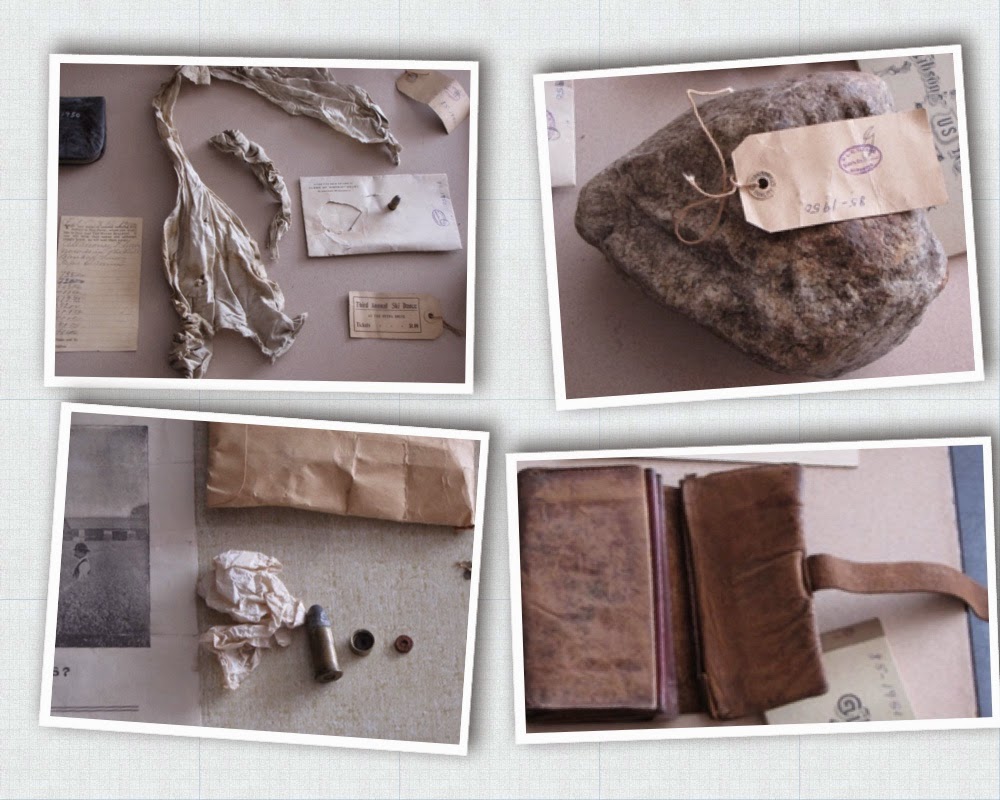
Stored at the Pope County Museum are three boxes of material labeled as evidence used in the Mitmoen murder trial.  Among the many pieces of physical evidence is a collection of papers and written material belonging to Sven, John, and Ammund Mitmoen.  It is interesting to note that John Mitmoen is apparently the author of all the written material.  Both the content and style give a glimpse into these men.

First, a photo of John Mitmoen. In this photo, he is a fairly young man, appears cheerful and a typical young man of the day. The photo was taken by a photographer in Alexandria, Minnesota. 


Included in the items found at the Mitmoen home is a small advertising booklet, shown on the previous page. On the outside cover is the name of a local store, "Lowry Drug Company", the store owner - C. C. Middents, and location - Lowry, Minn.  It was most likely distributed by the drug store as a promotional item, in particular promoting a line of pharmaceutical ointments, medicines, and remedies for a variety of ailments and made by the Nyal Company.

But interspersed between lists of ailments and cures for them, the booklet also contained pages available for making entries or for record keeping.  Many people did not have the resources to purchase costly ledgers or were unwilling to spend hard earned money on what they viewed as optional materials.  Thus, it is common to find notes, financial records, and even important documents like receipts written on scraps of paper or "free" materials like this booklet.  On the next few pages are some of the entries made by John to record important information.


On the first page (shown above) - the inside cover - are some entries detailing personal information giving us a more intimate insight into his life. He inscribes his name and address: John Jacobson, address - Lowry Pope Co Minn. R.F.D. No 1, Box 23. R.F.D. refers to "Rural Free Delivery", a system of providing addresses to rural homes.   The RFD entry may serve to date this booklet to around 1900. Later, No.1 became Route 1 in the address. Entries in the booklet are dated after 1905.

...

Here is a list of Lowry State Bank account amounts. These are presumed written by John Mitmoen even though the document is not signed. Handwriting is consistent with that in the other documents. The amounts listed are significant. They range from $40 to $735 - totaling $4,279.00. While this document certainly supports the widely held belief that the Mitmoen brothers were well-to-do, it does not support the belief that they completely shunned banks . The documents also support the narrative that the brothers had business relationships with several establishments in the area. 


There are more examples which point to a complex set of business relationships. It would appear they were much more typical businessmen and citizens than they were previously given credit for. Blank bank counter checks,  receipts for sales of several agricultural products including hay, barley, and interest on notes; presumably on loaned money.  The Mitmoen brothers appear to have loaned money to family members and neighbors charging interest on the loans, like a "mini-banker". 

...


But perhaps the most poignant document among these financial bits of paper and booklets is one the brothers would have received just days before their deaths. The following note and its accompanying mailing envelope was written by someone by the name of E. M. Benson, possibly a neighbor. It was mailed and postmarked in Lowry on May 3, 1915. Although the exact date of their deaths was impossible to determine for certain, their gravestones identify the date as May 6, 1915. If they received this communication in the mail, it would most likely have arrived at their home the following day - May 3, 1915. This might be the last mail they received. The note:


Chopping wood

Like many pioneer families in Ben Wade township, including the Stivland family, the Jacobsons purchased land in nearby Douglas County to provide a reliable wood supply.  On the prairie, as Ben Wade was, very little timber was available for use as fuel or for building materials.  As recorded in the Mitmoen probate documents, they had purchased wooded lots for this purpose.  Every year trees on these wooded lots were harvested, cut, split, and stacked on the farm to provide fuel for cooking and heating.  The following exchange of letters details a business arrangement in which John Mitmoen apparently hired someone from the Holmes City area to cut firewood and fence posts.  The first letter, written in broken English was written in 1908 and mailed from Holmes City, Minnesota.  It states:

"Dear Sir, I have finnes my contrack of choping you sum cordwood - 12 cords and 150 posttes. I wus you wold sent me the money of it - it will make $1725. of cord of wood $125. and fence postes 1 1/2 of postes so it will all to geter $1725.

please write to me wen you are going to get your wood ore sen me the money in the post mail ore post money order and if you want to shop some more cord wood let me know.
Yours verry (thurey) truly
Jos. Hukkinen
R.F.D. 4 Box 45, Alexandria, Minn."


The math is unclear. It is difficult to know if the sum is $1,725.00 or $17.25. John's reply letter includes the amount, $17.25, an amount more in line with values of the day. The person writing the letter is apparently from near Alexandria and has a Finnish name.


The answer to the first letter from Mr Hukkinen is shown in John Jacobson's letter to Mr Hukkinen.

"Lowry Pope County, Minn Jan 27, 1908

Dear Sir, I have live the money for cutting wood and posts for me all togeter $17.25 to Mr Sandberg. Please go over to him and call for the money. he will pay you as soon as you go over to him. I was over this week and looking over the wood all is right. Please go to Mr Sandberg and get your money. Yours Very Truly
Johannes Midtmoen
Lowry Minn RFD No 1, Box 23"


But this series of letters may raise more questions than it answers.  It seems obvious that John, and perhaps his brothers, had contracted with someone living close to their woodlot to cut firewood and fence posts.  The man, Mr Hukkinen, had written a letter informing the Mitmoens that he was finished with the job, and was requesting payment.  John had apparently written a letter in response, indicating that Mr Hukkinen should visit his neighbor and collect his money.  This all seems straightforward and typical.  But why was John Mitmoen's reply letter still in his possession 7 years later?  Was the letter never sent?  Did John communicate with Mr Hukkinen some other way?  Is this a "practice" letter - composed in an unfamiliar language?  Or did John Mitmoen write a "copy" for himself?  

Either way, these two letters are significant in their own way.  It is an obvious effort for two early immigrants trying to communicate with each other in a "third" language.  John is Norwegian, Mr Hukkinen is Finnish, but neither the Norwegian nor the Finnish language would work in this case. The letters are also significant in another way - John Mitmoen is obviously more comfortable in discourse than the other man.  In fact, John's letter demonstrates a surprisingly good command of spelling and grammar.  Not perfect, sure, but very good.  And the handwriting is very good, almost elegant.  Handwriting was given high priority in schools during the early 20th century as is obvious in written documents of the day.  This lends some credence to the assumption that John Mitmoen was an educated man.
...


Conclusions

Because the amount of information available on these three Mitmoen brothers is so limited, any conclusions we draw may seem unwarranted at best or arrogant at worst.  But I believe that even this limited material can provide a window into their lives.  

Details surrounding  the Midtmoen family's early life in Norway and emigration to America are well documented above, at least as much as we can infer from the records.  More research may indeed shed  light on where they lived, schools attended, and other details.  But it seems reasonable to conclude that the Midtmoen family had more than a passing familiarity with the Stulen farm and its inhabitants.  The close proximity of the farms, the family connection, the church affiliation, the confirmation class they shared, and their experience on the trip to America suggest that Sven Midtmoen and Sven Stivland had a great deal in common.  It is not really a stretch to assume they discussed emigration and may have planned the trip together. They settled on land next to each other and lived on that land for many years.  Maybe they shared the dream of emigrating to America.

 By 1870, most of the Midtmoen family had joined Sven in Minnesota. By 1871, all of them were in America.  For the next 45 years, they lived and worked in Pope County.  Sven was involved in chartering a new Lutheran church, presumably helped care for his mother during her later years, and worked with his brothers in a successful farming operation. It is also reasonable to assume they had social contact with other members of the family.  The family may have lived at the Mitmoen farm when they arrived in America.  Eventually, their brothers and sister married, had families, and worked in the community.  Records show they lent money, sold hay, and had various other financial transactions with family members. Unfortunately, a cloud hung over the family when the trial for their murders was directed toward the son of their brother, Gulbrand, in North Dakota.  

More is known about John Midtmoen.  Documents and photos featured in this account  show a man younger than Sven by more than 13 years; a man well enough educated to keep records, do basic math, write letters, and inquire into cures for a medical condition.  If, as the letters imply, John was fighting an asthmatic condition, he may have pursued a more "studious" path and he may have had difficulty functioning on the farm, particularly during such dusty operations as harvest, threshing, and the like.  Maybe his physical limitations made him a good candidate for keeping the books, lending money, and performing more cerebral aspects of the business.  

Probate records show that John Mitmoen had bigger bank holdings than either of his brothers, nearly $7,000 in bank notes, cash, and loans to others compared to no cash in Sven's name and $731.40 in Amund's estate. On the other hand, all 148 acres of the homesteaded land was owned by Sven, worth $8140.00 and 10 acres of woodland in Douglas County appraised at $500.00.  Amund owned 120 acres of land appraised at $6,000.00 located to the east and south of the Stivland farm.  Probate records state that all personal property, household goods, farm machinery, livestock, and a piece of land inherited from Lewis Jacobson were owned together.  It would appear that they divided the assets on a nearly equal basis.


Almost nothing is known about Amund Mitmoen.  Aside from his Norway church records, his travel and immigration records, and the probate records, there is very little information.  There are no other known documents, photographs, newspaper articles, or family stories to describe his existence.  One newspaper article published after his death hints that he was briefly considered a suspect in the murders - a mentally ill murder/suicide.  There was no forensic evidence to support this so that scenario was ruled out by the coroner and investigating sheriff.  That conclusion does not, however, rule out the possibility Amund may have suffered from some emotional illness.  I am reluctant to suggest it because it seems unfair to attribute the condition on such flimsy evidence.  And he was certainly functioning if he was able to purchase 120 acres of land and keep a farm going.  Farming 120 acres of land was very challenging in the late 1800s and early 1900s.  On the other hand, it is perhaps worth mentioning that any mental illness, no matter how minor, would have had a major stigma component.  Certainly, any mental illness on the part of any one of the three brothers would have contributed to their tendency to protect their privacy.  

It goes without saying that more information is likely to emerge.  Any research effort can uncover previously unknown information.  Translating documents from Norwegian also is likely to contribute more pieces of the puzzle.  And other families will conduct their own research thus making important contributions to the story of other families.  I will continue to update this story as the story emerges.
...


Lastly, the year 2015 is the 100 year anniversary of the, as yet unsolved, homicide of these three men - relatives and neighbors of the Stivland family. The following article appeared in a March, 2015 Pope County Tribune.


Appendix - Murder Trial Evidence

Clockwise from top left: handkerchief gag, bludgeon, wallet, bullet & casings

For Sid's account of the1915  Mitmoen murders, see the posting 'Mayhem in Ben Wade Township'